
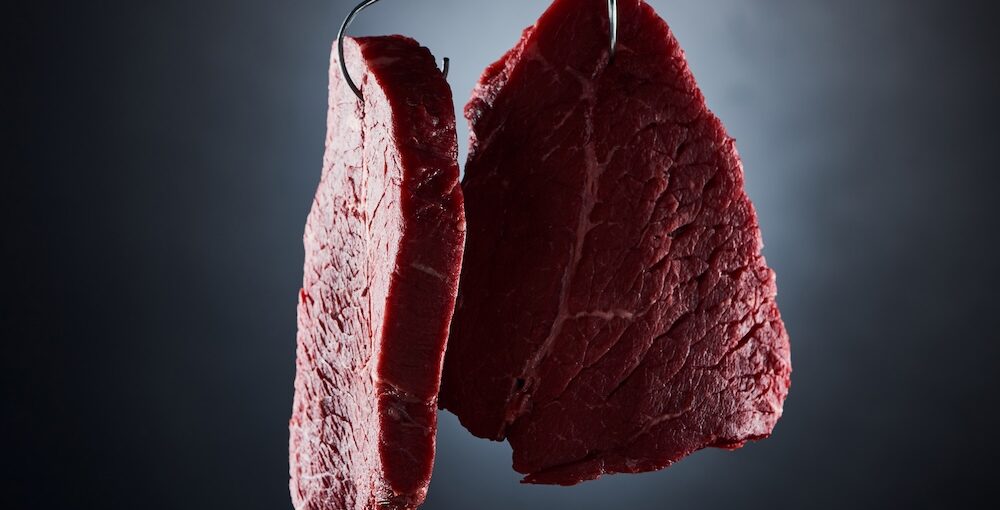
When you invest in a quarter beef or a bulk order of pasture-raised chicken from Blessings Ranch, you’re buying more than meat. You’re buying months of high-quality, nutrient-dense meals.
However, the journey from the freezer to the table is where many home cooks accidentally compromise both flavor and texture.
If you’ve ever thawed a steak only to find a pool of red liquid in the package and a gray, dry result on the grill, then you may have lost your beef to a poor thawing process.
Here is the science-backed, three step method to protect the integrity of your farm-fresh beef.
Why does quick thawing ruin your farm-fresh beef?
To understand why thawing matters, we have to look at the cellular level. When you freeze meat, the water inside the muscle turns into ice crystals.
If you thaw that meat too rapidly, such as in a microwave or even under hot water, those ice crystals melt violently, tearing into the cell walls.
This causes the natural juices inside your beef to rush out of the muscle fibers, leaving your meat dry. Once that moisture is gone, it can’t be put back in again. The sear won’t fix it. Seasoning won’t fix it. It will stay tough and bland because the internal moisture has already escaped.
What’s the right way to thaw your farm-fresh beef?
Thaw your beef gently with a slow refrigerator thaw.
- Move your cuts from the freezer to the fridge at least 24 hours before you plan to cook for smaller items, or 48 to 72 hours for items exceeding 4 lbs.
- Keep the meat at a consistent temperature of 38°F. Just warm enough for the ice crystals to melt without tearing, just cold enough to keep the meat from entering the danger zone where bacteria can spoil the meat.
Check your fridge temperature! Meat can start to spoil at just 40°F.
What should you do after the meat thaws?
Once the meat is fully thawed and in the fridge, your second step happens about 30 minutes before cooking. Remove the meat from its packaging and pat it dry with paper towels.
Moisture on the surface of your meat is the enemy of the “crust.” If the surface of the steak is wet when it hits the pan, the heat will spend its energy turning water into steam rather than browning your meat.
By drying the surface, you ensure a perfect Maillard reaction. The Maillard reaction is the chemical bridge that creates the savory, caramelized crust that’s characteristic of a high-end steakhouse meal.
Then, temper it by giving it about 20 minutes to sit before you put it on the pan. Grass-fed beef is leaner than grain-fed beef and it’s highly sensitive to temperature shocks. If you throw a fridge-cold steak onto a 450°F cast iron skillet, the muscle fibers will seize and tighten, leading to a chewy texture. Allowing meat to take the chill off ensures even cooking from the edge to the center.
Order Your Bulk Beef Today
Now that you know how to care for your bulk beef and get that perfect cook, it’s time to score some! Why not put down your bulk beef deposit and secure one of the last 2026 pick-up dates? Dates are going fast, so you’ll want to move soon!